







Materials · 22 September 2026 · 5 min read
Wool, silk and bamboo silk: what the fibre changes underfoot
Wool is the floor. Silk is the light in it. Bamboo silk is the compromise with a condition attached. The honest differences, including the ones that only show up years later.
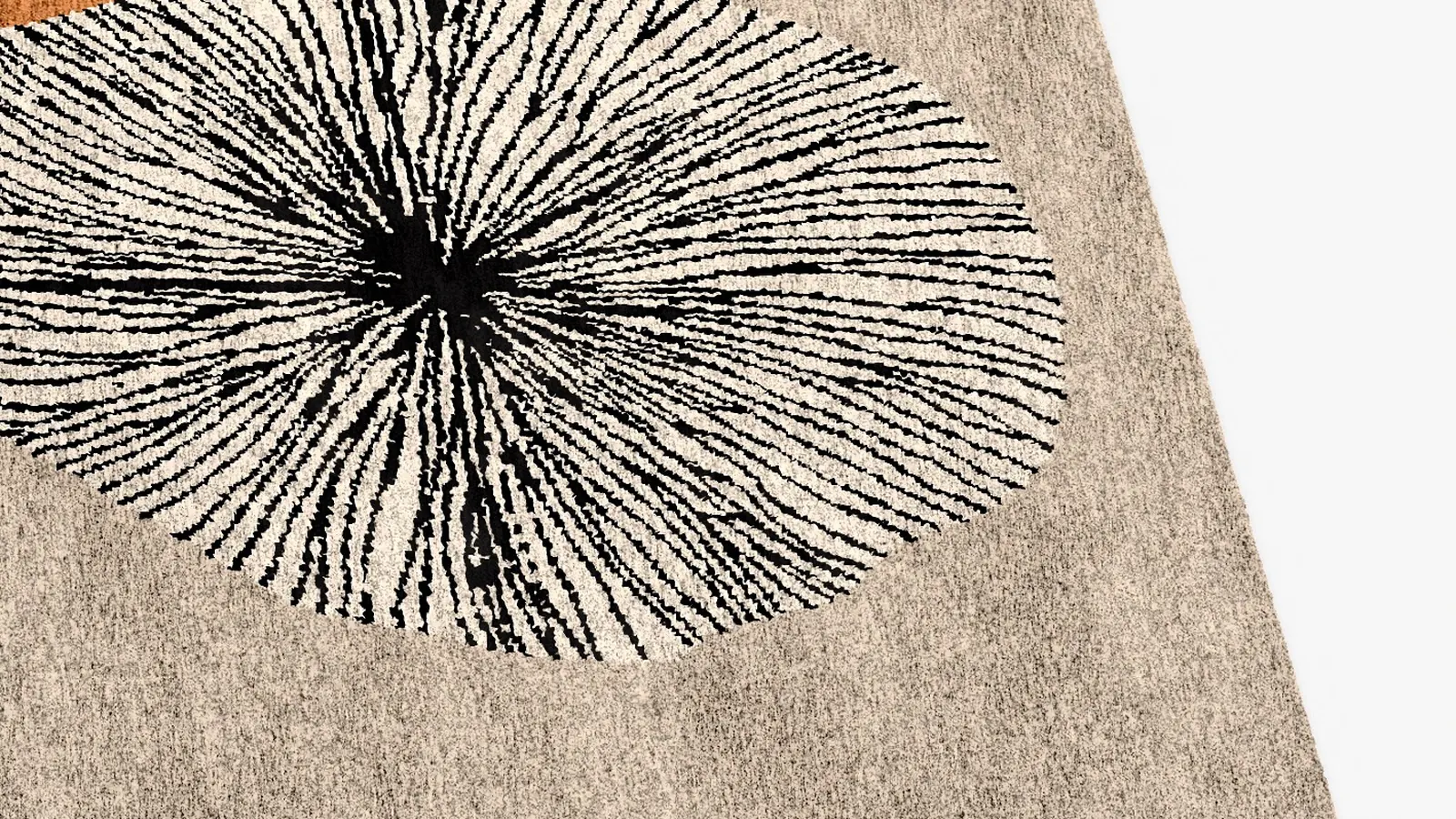
The pile of a Carpet Artisan rug is hand-spun New Zealand, Tibetan or Indian wool. Pure silk and bamboo silk are used where the design calls for them, usually as accents rather than whole fields. All of it is natural fibre. What follows is what each one does, including where each one is the wrong choice.
Wool, and why it is the default
Wool is the material the whole craft is built on, for reasons that are physical rather than sentimental. Each fibre is crimped, so a crushed pile stands back up; it holds a natural grease that makes a fresh spill bead rather than soak; it takes dye deeply and evenly; and it does not readily carry a flame. A wool pile hides soil between cleanings better than any other fibre on the floor, which is why wool is what a rug meant to be walked on is made of.
The wools differ in handle. Highland wool from the Tibetan plateau is long-stapled and springy, and is what gives a Tibetan-knotted rug its characteristic bounce. New Zealand wool is pale and even, which matters when a design depends on clean, light colour. Indian wool sits between them and carries most of our field weaving.
Pure silk
Silk is the only fibre that changes colour as you walk around it. A silk pile lies in one direction and reflects light along it, so the same area reads light from one end of a room and dark from the other, and a drawing made in silk moves with the day. It also takes the finest knot counts, which is why the most detailed pieces in the trade are silk.
The cost of that is resilience. Silk has almost no crimp, so a silk pile does not spring back: footprints and furniture marks stay, and a heavily walked silk rug flattens along its traffic line and will not recover on its own. Silk is also the fibre that least forgives a wet mistake. Used as an accent inside a wool field, none of this is a problem. Used as the whole field of a hall rug, all of it is.
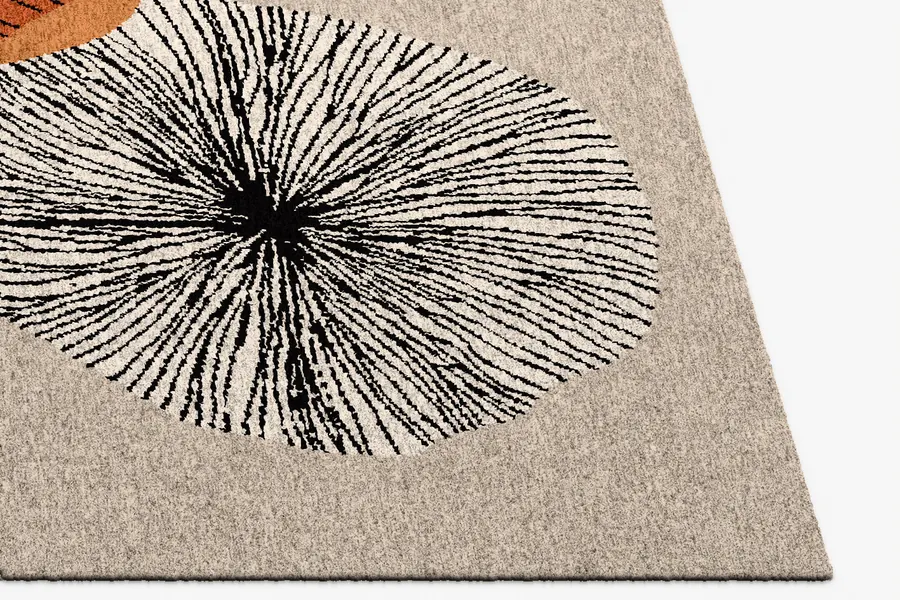
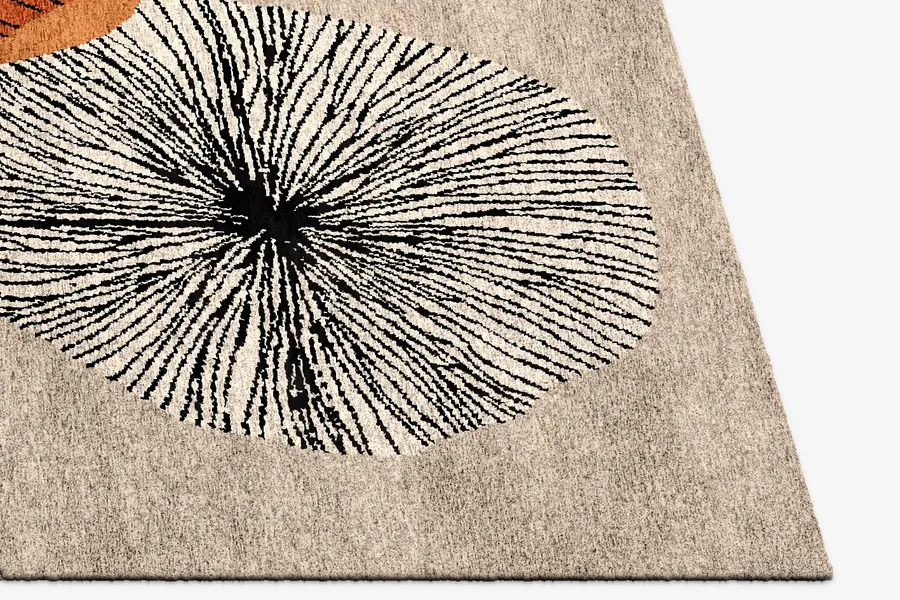
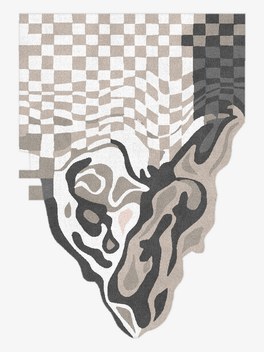
Both of those are our own renders of the same drawing at the same scale, one knotted in wool and one in pure silk, so the difference you see is the fibre and nothing else.
Bamboo silk, honestly
Bamboo silk is not silk. It is a regenerated cellulose fibre, viscose, made from bamboo pulp, and it exists because it gives much of silk’s lustre at a fraction of silk’s price. In a rug it looks close to silk when it is new, and in an accent zone it does its job well.
Two things should be said before anyone specifies a large area of it. It is weaker when wet than when dry, so a spill that is rubbed rather than blotted can leave a permanently dulled patch; and it is more prone than wool to watermarking, which is why bamboo silk should go to a specialist cleaner rather than a general carpet cleaner. In a bedroom or on a low-traffic accent it is a good value decision. In a dining room it is not.
| Wool | Pure silk | Bamboo silk | |
|---|---|---|---|
| Sheen | Low, matt | High, directional | High when new |
| Springs back | Yes | Poorly | Poorly |
| Hides soil | Well | Poorly | Poorly |
| Wet spill | Blot, usually recovers | Call a specialist | Blot, never rub |
| Best as | The whole rug | Accents and fine detail | Accents, low traffic |
| Relative cost | Baseline | Highest | Between the two |
What wears out first
A rug rarely fails in the middle of its field. It fails at the edges, where a selvedge is caught by a vacuum or a chair; at the fringe, which is the warp itself and is the first thing a restorer rebuilds; and along a traffic path, where the pile is crushed rather than worn. Wool recovers from the third of those on its own, which is most of why wool is the default.
Sunlight is the other agent, and it is indifferent to fibre. Plant dyes deepen and soften with time, which is the patina people pay for; direct sun accelerates it unevenly, which is the patina nobody wants. A sheer blind, a UV film on the glass, or turning the rug end to end every six months all fix it.
Cleaning, by fibre
- Wool. Vacuum with the beater bar off, blot a spill with a dry white cloth and cold water, and have it hand-washed professionally every three to five years.
- Bamboo silk. The same, except that rubbing a wet patch will dull it permanently, and the cleaner should be told the rug contains viscose before they quote.
- Pure silk. Blot and stop. Silk is a specialist job and an ordinary carpet cleaner can set a stain into it for good.
Mixing fibres in one rug
A colour in a Carpet Artisan design is a zone, and each zone can carry its own fibre. That is the usual way silk is used here: a wool field with the motif, the line work or a single colour in silk, so the drawing lifts where the light hits it and the floor underfoot stays wool.
The same mechanism is what lets a design carry a carved or looped surface in one colour and a flat one in another. On each product page the fibre is chosen per colour, and the rug is redrawn with that choice, so the effect can be seen rather than imagined.
What to ask for
- A rug that is walked on daily: wool throughout, and silk only in the motifs.
- A rug under a dining table: wool, no exceptions.
- A bedroom rug where the light comes in low: silk or bamboo silk accents earn their place.
- A rug for a terrace: the outdoor construction, which is woven flat in a recycled yarn and is the one place a synthetic belongs.
A hand-knotted swatch in your own colours and fibres is CHF 95, refunded against any order over CHF 5’000, and takes two to three weeks. For a fibre decision it is worth more than any photograph, including ours.