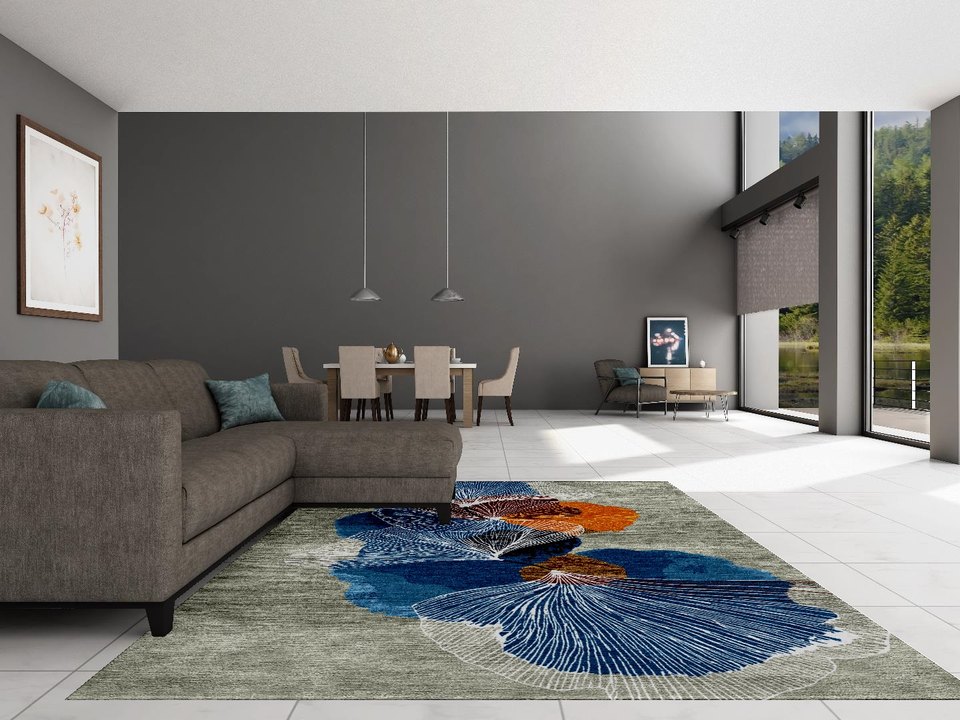

The Craft
A knot is
a small decision,
repeated.
A 200 by 300 cm rug at 150 knots per square inch contains roughly 1.4 million individual hand-tied knots. Each one is a decision — colour, tension, position — that a weaver makes and cannot undo. This is the difference between hand-knotted and everything else.
Persian and Tibetan. We weave both.
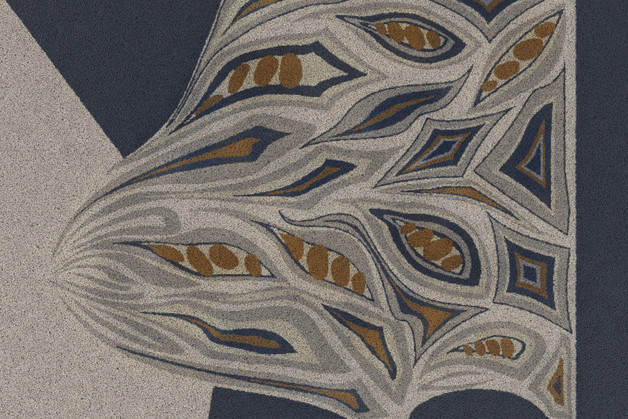
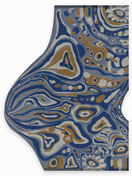
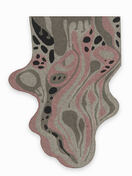
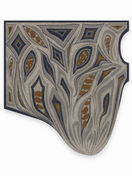
The Persian (or Senneh) knot is asymmetric: the yarn wraps around one warp thread and passes under the next. It produces a finer, more detailed pile and is favoured for representational designs, intricate borders, and silk work. Our Earthen Form collection is woven in Persian knot.
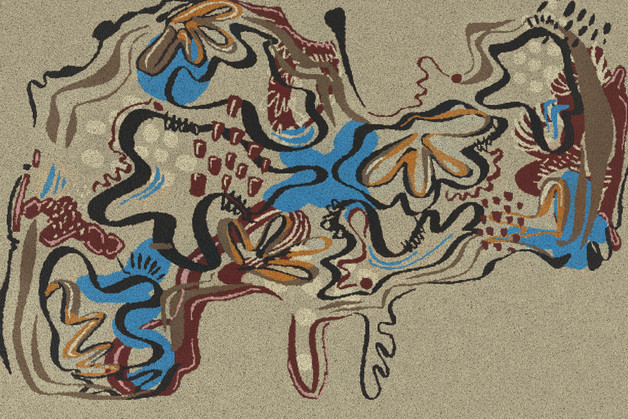
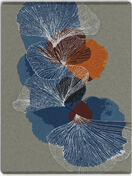
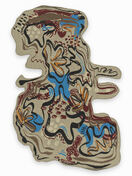
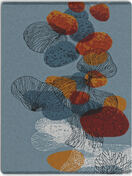
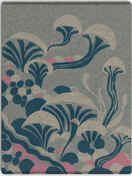
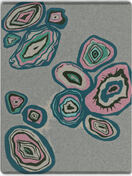
The Tibetan knot uses a temporary metal rod laid across the warp; the yarn loops around the rod and a single warp thread, and the loops are cut at the end of each row to release the pile. The result is a chunkier, more textural surface and a denser, harder-wearing pile. Our Rhizome and Organic Flow collections are woven in Tibetan knot.
Neither is “better.” They are different tools for different design intents — the way oil and acrylic are different tools for different paintings.
Wool. Silk. Bamboo silk. Nothing synthetic.
The pile is hand-spun wool from New Zealand, the Tibetan highlands, and India, selected for staple length, tensile strength, and the depth it takes from natural dye. This wool carries more lanolin — the natural oil — which is what gives a properly made wool rug its self-cleaning, stain-resistant character.
Pure silk is reserved for accent areas where the design needs the higher sheen and finer knot definition silk allows. Bamboo silk — a plant-derived fibre — gives the same luminosity with a lighter footprint. We do not weave full-silk rugs as standard — the wear characteristics are not what most clients actually want.
Five fibres, nothing else: New Zealand wool for resilience, Tibetan wool for texture in high-traffic settings, Indian wool for the depth it takes from natural dye, pure silk for luminosity, and bamboo silk for a sustainable sheen.
Vegetable where possible. Low-impact reactive where not.
Vegetable dyes are extracted by simmering plant material in water: indigo leaves, madder root, weld flower, walnut hull, pomegranate rind, oak gall. The colours produced are deep, complex, and age beautifully — they shift over decades rather than fading.
Where a colour cannot be achieved with vegetable dye — certain bright cyans, true magentas, neon accents — we use Swiss-supplied low-impact reactive dyes that bond to wool at low temperatures and pass OEKO-TEX Standard 100 safety testing. We disclose dye composition for every rug on its provenance certificate.
Mechanical fact, not marketing.
In a hand-knotted rug, every tuft of pile is a separately tied knot anchored to the warp foundation. The pile cannot pull out, cannot unravel, and cannot shed. The rug is its own structural object.
In a machine-tufted rug, the pile is shot into a synthetic backing fabric with a needle gun, then held in place with latex adhesive. The pile is not knotted to anything; it is glued. Vacuum cleaners and foot traffic pull it out. The latex backing dries, cracks, and crumbles, typically within ten to fifteen years.
This is why a hand-knotted rug from 1850 is still in service in a country house in Yorkshire and a machine-tufted rug from 2015 is in a landfill. The economics of buying one good rug instead of six bad ones become obvious once you measure on the right timeline.